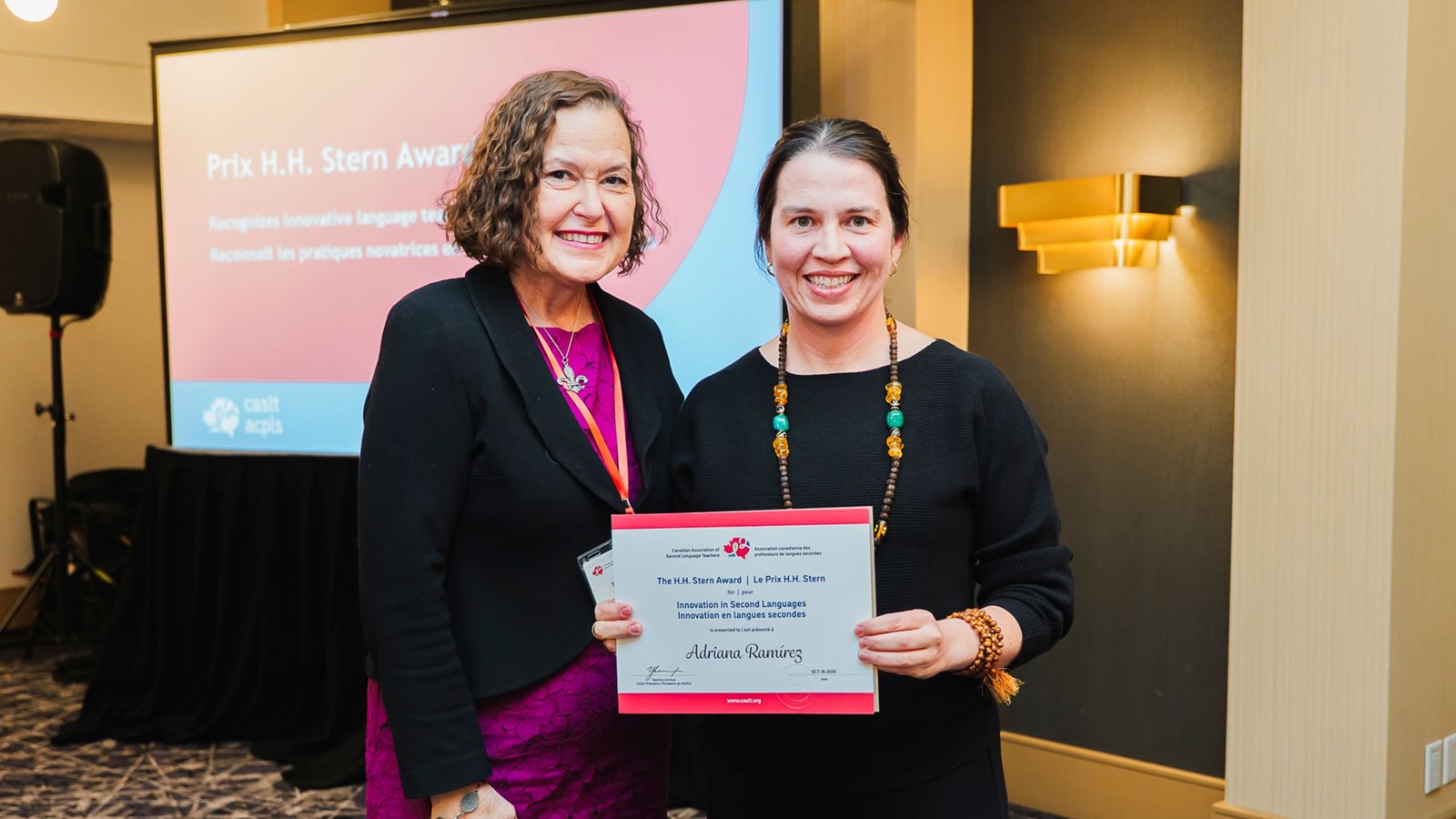
Semiahmoo Secondary teacher earns national H. H. Stern Award for innovative language teaching
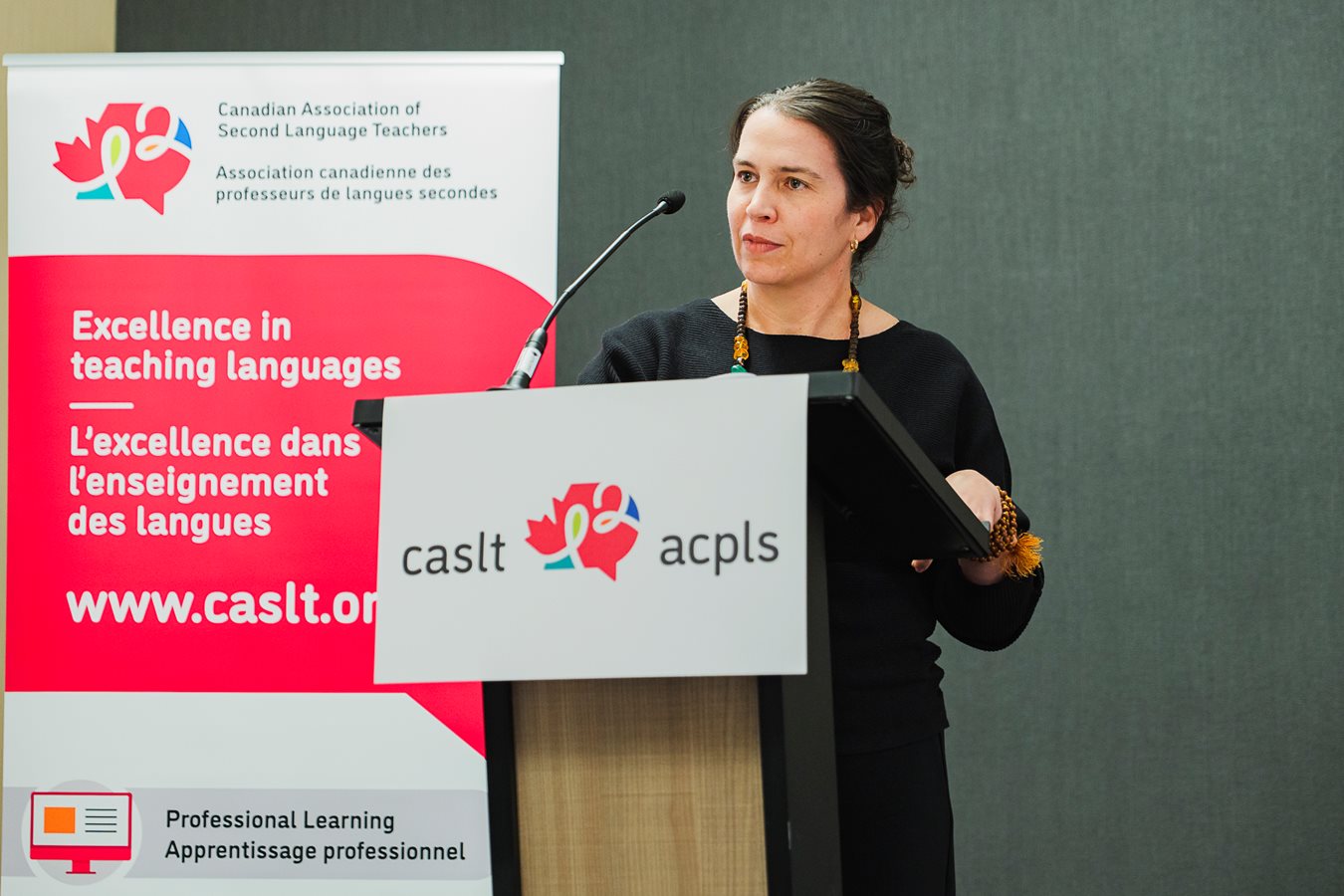 Every unit in Adriana Ramírez’s IB Spanish class starts with her students’ own lives.
Now, the Semiahmoo Secondary teacher has received the H. H. Stern Award from Canadian Association of Second Language Teachers (CASLT) for her work developing culturally responsive teaching in the language classroom. Granted each year to a language teacher in recognition of innovative teaching practices, the award aims to encourage educators to share what works in their classrooms with one another.
“I found out through an email I received over the summer, and I was quite shocked,” Ramírez said. “Everything I do comes from my heart, not from a desire for recognition. Still, it’s always nice to know that others see your work and appreciate it.”
Culturally responsive teaching, she explained, “recognizes how important it is to include students’ cultural references in every aspect of learning.” It builds on students’ own experiences and prior knowledge, and it brings in literature by authors from diverse cultures and from all parts of the world, telling their own stories. That way, she said, “students can see themselves in what they read.”
With traditional methods in the language classroom, educators often default to the usual books, the ones written about us, not by us.
In her classroom, each topic begins with a connection to students’ own lives. The class then explores the same topic through the perspectives of the Spanish-speaking world and compares the two. “We find that our differences make us special, and our similarities unite us,” she said.
One example comes from Ramírez’s home country of Colombia. Students read a novel about coffee culture, studying fair trade and ways of living from the land. For their oral presentations, each student then speaks about the same cultural elements, but from their own culture, looking both to celebrate and to question certain practices.
Students learn to look critically at their own culture as part of a broader society and system. They leave her class with something deeper: the understanding that every culture, including their own, can be both celebrated and questioned, and that they have a role to play in making things more just.
Ramírez credits her students. “They give me a reason to keep going, to keep improving, and to be a better teacher,” she said. “Everything I do is for them.”